News:

Don't forget to read the forum rules.

Main Menu
Menu

Show posts

This section allows you to view all posts made by this member. Note that you can only see posts made in areas you currently have access to.

Show posts Menu

Messages - Electrickey

#51
Quote from: Paleophone on October 22, 2018, 04:24:11 PM
Electrickey, once you've removed the rust, what do you coat them with to prevent further rusting?  Or does the product do that?  Apologies if I missed something.

I find that pre-1963 reeds tend to be rusted or at least tarnished, whether or not they are in envelopes.  Especially those found in the 120 family and pre-A 140 family.  (Including the 20 bass register reeds of pre-A 140's etc, which otherwise are similarly-shaped to 200 reeds.)

Sometimes the product keeps the rust off without putting anything on it but I'm guessing it's just because the air quality is not as humid for the time there is no rust.

As I have not experienced rusty reeds yet, according to Steveo he suggests WD40. You can try that. As far as how the WD will affect the sound, I'm not sure as I have not applied anything to reeds. Perhaps after the WD dries, there is no affect on the sound.

Don't spray the reeds with WD40 if they are still in the piano to keep the rest of the piano parts from getting over-spray. Collect some in a small container and then use a small brush to apply the WD to the reeds.

All of the rust converter work I've done are on guitar parts and the use of basic oil like clock oil keeps the rust away.

Some areas of the planet are just bad on metal parts. Perhaps where you store your Wurli might help keep rust away.
Turning the piano on and letting heat circulate inside the lid might keep the air under the lid drier than not after you get the rust off the reeds.

A thick vinyl cover with a felt like interior and elastic gripping edges might help keep the piano dry when not in use.

Also your finding that certain year reeds have rust might be key that the production was such that rust collects easier on those particular reeds.

It's mainly hit and miss. Some units of anything get rusty while others survive without rust.


#52
Quote from: pablotiburcio on October 21, 2018, 07:59:18 PM
Results of a local market product.
It appears that the product has removed a protective layer of steel.
Glad I tested it on a broken reed.

That the reed has rusted the protective layer is already gone on the areas that are rusted.

Try diluting the product with water instead of using full strength or don't soak the reeds too long in the product.

Note the usual solution would be to replace the reeds if you don't like the rust or use the reeds as is.
But if trying to save hard to find and import reeds, then going slow and lighter on the rust proofing might be the better alternative.
#53
There are numerous nuances to consider in the case of instruments that have an acoustic or mechanical reason for their sounds. Even modifying the original instrument changes the sound. It will always be the case of comparing the original to the clone and noticing that the clone still sounds like a clone when compared directly to the original.
#54
Quote from: pianotuner steveo on August 16, 2018, 07:22:40 AM
Rhodes brand. Lol

Hehe, guess it would go great with Rhodes tine cleaning then. :P


Before...


After...
#55
Quote from: John Steel on August 14, 2018, 11:25:13 AM

Thanks for your reply Electrickey - That's also great advice. I think I had better invest a high quality iron! Best wishes John.

John if you can, use a good grade of solder. The Wurli deserves the TLC.

Cardas brand gets a lot of thumbs up for audio, easy to flow. It is available in the UK.


You can get 100 gram spools as well. It's a meld of silver, copper, tin & lead.

Or a 3m length sold by xaudiodesign on eBay for about 5 pounds.

https://www.ebay.co.uk/itm/CARDAS-QUAD-EUTECTIC-SOLDER-3m-length-Silver-Copper-tin-Lead-Rosin-core/112317914369?hash=item1a26ab5d01:g:JEAAAOSwjMJXCORu

#56
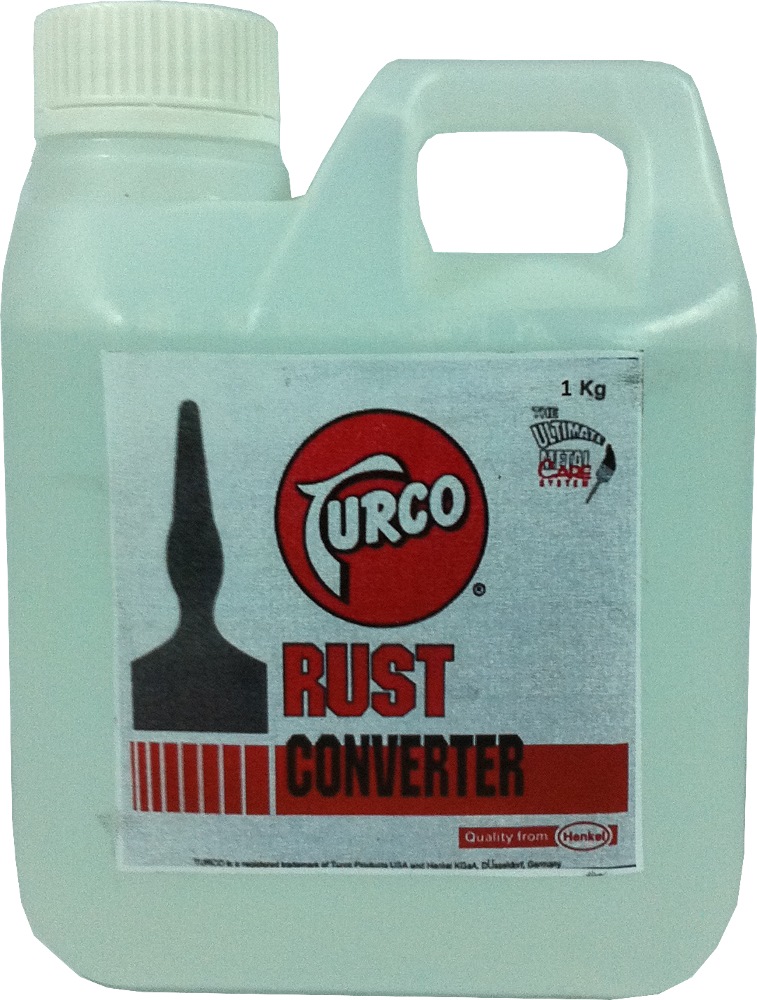
Loctite made by a German company Henkel makes TURCO rust converter.

Look for this product in your country if outside CONUS and you can't find an alternative from the U.S.

I've used it for years.

It works well to convert rust into a gray paintable surface. It's not goopy, pours like water. Use in a well ventilated area as it is an acid. Have a fan blowing towards you to cut down the inhalation is what I like to do. Even for surfaces you don't plan to paint you can convert the rust and then use a needle oiler to drop small amounts of sewing machine oil on parts.


I use it for bridge parts, screws on my guitars and anything that gets rusty. Heavy rust will need to be done in stages and cleaned off if the rust is caked. But slight surface rust is easy.

There has been concern for the "protective coating" on the reeds, but if the reeds are rusting and since reed replacement is not that easy, trying to stop the rust might be something worthwhile doing since the "coating" has lost its effect. Stopping the rust from spreading or increasing would then allow you to clean the reeds with oil as the manufacturer suggested once the rust is contained or stopped.

Use a small clean artist brush or old toothbrush (child's size might be better) to apply a small thin amount of TURCO to the reeds at a time letting it dry before the next coat if needed or a fresh Q-tip (watch for stray fibers) might give you more leverage to apply and slightly rub converter into the rust on the reed while taking some of it off. Doing it slow and methodically will keep the converter off other parts inside the piano.

Light your work area properly, use a headlamp if you can. I recommend the Nitecore NU10 floodlamp, btw. The lamp is great but the strap piece tends to fail, if under warranty Nitecore will send you new strap brackets as has happened to yours truly. You can even use the lamp while it's plugged into the USB charger. (Note: not a paid endorser for Nitecore 8))


Yes do not sand or scrape your reeds.

#57
Congrats! I was born overlooking Prospect Park.
#58
The Wurlitzer Electric Piano / Re: Feet for a 200A
August 14, 2018, 04:42:58 AM
Are these the adjustable height feet?

There are a few companies that provide similar replacements with the nylon foot pads.

but good post knowing the dimension for the 200A leg tips.
#59
After washing the legs with soap and water and using a rust converter liquid, I cleaned the rust pits off my 200A's legs using #0000 steel wool and lots of elbow grease. I then used some good metal polish. Repeat the process when the pits start to get funky again.

From 5 feet you can't tell the difference.

Not unless you get the steel legs rechromed will you do any better.

Nothing sticks to chrome well enough to try and seal it, like with clear paint. Eventually it will flake off leaving more work to even things out scraping off the paint.

The leg tips, used rust converter and then painted them with black epoxy. If they don't stay on, use some masking tape as a shim and the tips should stay on.


#60
You can't find a speaker reconer tech where you live? Sometimes parts can be found by these guys who deal with speakers or they know how to fix things without having to buy new parts.

Sounds to me the coil needs adjusting, or there's dirt/rust inside the gap where the paper bobbin sits within the magnet and is rubbing up against the bobbin or dancing around while you play.

From your video it was not clear enough to see the condition of the cones. Perhaps the cones can be reused or edges repaired. But the weird sound doesn't happen all the time only during peaks in the volume.

I'd say take it to some speaker reconer in your country rather than deal with expensive shipping and customs. If that fails then you'll do what many people do who live outside CONUS playing American made instruments, pay to get the parts you need, where is, as is.
#61
In addition to all the advice mentioned, using a quality heat sensing solder iron when I first got it after having a piano tech adjust the hammers and action, cleaning out the bottom of the case, I carefully re-flowed the amp solder points on my 200A's circuit boards (amp and pre amp) and the thunderstorms stopped. Tightened up the ground spots.

Did not change any parts. It's been fine for a number of years now.
#62
Quote from: Paleophone on August 13, 2018, 10:03:59 PM
Quote from: Tonewheel on August 13, 2018, 01:01:43 PM
I was listening to some early Ray Charles versions of What'd I Say and I can hear some slightly out of tune notes as well as one or two that are a little dead-sounding.
He's playing a 1958 model 120.  Very different sorta beast there.

I think the quality of the recording should be factored in. It was done live in 3 or 4 takes with the entire band.
The studio had just acquired an 8 track and was learning how to run it. Small room, 1959 technology, no overdubs. You can hear different versions (takes/mixes) of the song today and what appears to be a remaster. Perhaps they went through all the takes and pieced things together and released different edit/mixes of the song. There's supposed to be a real piano on the track as well. But yeah one version you can definitely hear the piano hammers not hitting their mark while another version of the recording the dead notes came out smoother for some reason. Was it the piano or the way it was played among the different takes? Wurlis get quirky as a matter of its nature. And without knowing how they recorded the Wurli and then released different mixes, what are we really listening to?

Back then many recordings had flats, sharps and mistakes left in. They still became hits. :)
#63
The Wurlitzer Electric Piano / Re: Is that original ?
February 25, 2018, 08:31:03 PM
Quote from: jam88 on February 04, 2018, 09:56:58 PM
I have a picture of Richard Carpenter playing a black Wurlitzer with those smaller stickers on the sides,

Yes I've seen the same photo with Richard. Blurred but discernible.


#64
Quote from: pnoboy on February 24, 2018, 07:32:43 AM
Quote from: Electrickey on February 23, 2018, 10:43:22 PM
Quote from: pnoboy on February 23, 2018, 06:58:17 PM
Quote from: Electrickey on February 21, 2018, 06:29:17 PM
Quote from: pnoboy on February 21, 2018, 12:07:08 PM
I have to say that I agree with Tim from Retrolinear.  I think there would surely be broad agreement that hiss and hum are not desirable.  Would anyone want a stereo system with hum and hiss?  The most likely situation is that players of the Wurli put up with the hiss and hum because they didn't know how to get rid of it.  I suspect 99% of Wurli players would be happy to get rid of both it it was free and simple to do.   As for other aspects of the amp, as Tim stated, if you duplicate the input impedance, the gain and frequency response of the whole amp as measured with its speakers connected (some amps behave differently when connected to a complex load as compared to a resistive load), its power output, and its distortion characteristics, then your amp will sound the same as the Wurli amp.  Distortion is often misunderstood--it you can't hear it, it's of no consequence, and in general, I don't think Wurlis had or were played with noticeable distortion.  I had a Wurli once, and played it through a guitar amp to get enough volume for gigging.  Clearly, this amp had different characteristics than the built-in amp, but in no way did I feel that it detracted from the Wurli sound.

I am reminded of a story that a former colleague of mine told me.  He used to work at the Zildjian cymbal company, which would allow some musicians to come in and select the cymbals they liked the best.  Often a musician would go through all the cymbals of a given type looking for the best one.  If they didn't find one out of their stock, the company would start giving the musician the same ones they had previously tried.  Often, the musician would find the "best" one and leave a happy camper.
Quote from: Electrickey on February 21, 2018, 06:29:17 PM
Again affirming the consequent, if not appeal to complexity, moving the goalposts. Fallacious arguments.
Fallacious in your opinion.  If I affirm the consequent, so do you with your unsubstantiated claims.  Also, I didn't move the goalposts, I merely asserted that one can ascertain the behavior of an audio amplifier by measuring the appropriate parameters.

Quote from: Electrickey on February 21, 2018, 06:29:17 PM
As previously explained it was because digital has spoiled the ear to pick out noise immediately. Already explained inherent noise in pipe organs, leakage in Hammond organs, for some reason is being missed in the information uptake. Yet for generations, noise in everything electronic audio was accepted and overlooked. Records with pops and clicks.
Not true--noise was not accepted and overlooked in the pre-digital era.  Audio amplifiers and receivers often came with pop and click filters to reduce the undesirable sounds of scratched and/or dirty records.  Amp designers went to great lengths to minimize hiss and hum, and the reviews of audio products typically measured and published the value of hiss and hum of reviewed products.

Quote from: Electrickey on February 21, 2018, 06:29:17 PM
And still long playing records have a sound that digital has not duplicated yet. We have left behind a fuller sounding medium for no noise and ease of cartage and fooled one's self that things are as best as they can be.

Many would disagree with you.  Although some listeners say that CDs have audible flaws, there are other digital reproduction standards that outdo CD quality such as SACD and DVD audio.  I believe the best digital reproduction can withstand double-blind testing.  You do believe double-blind testing, don't you?

Quote from: Electrickey on February 21, 2018, 06:29:17 PM
The issue I have with changing the amps/preamps in a Wurli is the way the keyboard sounds react. I have not heard a mod that retains the basic character and reaction to the player of the piano, (with or without the noise). It is similar to how some guitar pedals will adversely affect the sound of a guitar and a hunt for something else or a mod is done as the player does not like the way his guitar now reacts with certain pedals in the chain.
This is simply asserted by you without proof.  Further, unless tested in a double-blind way, your statements carry little weight.  You say you have "not heard a mod that retains the basic character and reaction to the player..."  That is a phenomenally broad statement that hardly seems believable.  Either you have only heard poorly designed mods, or your conclusions are likely prejudiced by your expectations.  Psycho-acoustic testing and decades of audio testing have shown that humans are incredibly suggestible.

Quote from: Electrickey on February 21, 2018, 06:29:17 PM
The cymbal story only proves one thing, that in any situation, the best of the lot presented will be chosen.
Quote
Perhaps I didn't adequately describe the situation.  After the musician tried all the examples of a particular cymbal, he was not told that he would then try the same ones to pick the best, or, perhaps, the least bad of the lot.  Instead, he was presented with the same cymbals without being told that he already tried them.  Often, he would find one of the cymbals he previously rejected and now thought was just what he wanted.

Quote from: Electrickey on February 21, 2018, 06:29:17 PM
Some can't tell that the sound/reaction has changed (to the player) and it won't matter to them.
..but you, with your superior hearing can tell, no doubt?

Quote from: Electrickey on February 21, 2018, 06:29:17 PM
As mentioned, working production for a named touring band supplying them with a Wurli just last Saturday, they merely asked for a backup Wurli at the ready, having brought their own "modded" 200A with tremolo speed knob. Someone we know of must've been the one who worked on that Wurli but here you have the band wanting a backup nonetheless.

So much for "reliability."

You have no specific information as to the reliability of Tim W.'s circuit.  It may be 10x the reliability of the original.  I surely don't know, and neither do you.

Quote from: Electrickey on February 21, 2018, 06:29:17 PM
Everything audio has been based on a signal to noise ratio. But if like the guitar player the Wurli player does not like when he strikes the keys and the sound does not react the way he's experienced before, he will not be satisfied and will want to move on.
This is surely not the case.  SNR is one of the many important parameters of audio equipment, but hardly the only one that audio designers have paid attention to and have striven to optimize.

Quote from: Electrickey on February 21, 2018, 06:29:17 PM
Even shielding a guitar for example changes the sound of that guitar's pickups. You'll either like it or not. But to say "it has less noise" as the only indicator of improvement is a weak reason to change things.
If that's true, then the shielding changed some other parameter(s) that are probably not that hard to measure.  Sound reproduction is not magic.

More fallacious arguments, strawman, resorting to AD HOMINEM. Geeze...

i THINK YOU NEED A CRASH COURSE IN LEARNING HOW TO COMMUNICATE.

You take a sentence, change the intent and then substitute something else as if that was the original intention.

Nothing you said made sense as regards what I said.

Learn the difference rather than put words in people's mouths.

AD HOMINEM!

Look it up!
You say, "You take a sentence, change the intent and then substitute something else as if that was the original intention."  All I did was quote you word for word--nothing added, nothing deleted.  Additionally, I showed your whole post, so the context of your statements would be clear.  You then go on to accuse me of ad hominem, whose meaning I don't have to look up, when the folllowing are the things you said about me,

"i THINK YOU NEED A CRASH COURSE IN LEARNING HOW TO COMMUNICATE.

You take a sentence, change the intent and then substitute something else as if that was the original intention.

Nothing you said made sense as regards what I said.

Learn the difference rather than put words in people's mouths."

Those are quite a string of insults!
  None of them are true, IMO.  I am happy to let other readers of this post draw their own conclusions about my ability to communicate and the content of my posts.  In any case, I am calling a truce--there's nothing more I need to add, and I will graciously allow you the final word if you so choose.


You still don't understand where you're wrong as you still don't understand what a fallacious argument is much less what an ad hominem is, yet you post:

QuoteThose are quite a string of insults!
after posting this:
Quote..but you, with your superior hearing can tell, no doubt?

Then you commit another fallacy of argument one of appealing to the crowd (Argumentum ad populum) when you posted this:
QuoteI am happy to let other readers of this post draw their own conclusions


While you are watched chasing your own tail, this, you may ponder.


#65
Quote from: Tim W on February 21, 2018, 11:58:40 PM
The merits of playing a real mechanical/electro-mechanical instrument vs. playing a digital simulation or sample are not being argued here.  The real instrument is better from a musical experience- period.  Real instruments allow nuance and infinite resolution of dynamics.

Agreed, was merely pointing to the future as I see it, meaning these vintage pieces are going to be replaced down the line with something artificial by the next generations. Am sure others see this too. As time passes, the original sound will be forgotten.

I have been to your site going on years, and know what you are capable of. I for one am not doubting your abilities. I am not an electronics designer. What you and others do is a talent unto itself.

I also know who MIDI'd that Wurli but do not wish to give anyone a bad name. Times are tough enough. People try their best.

What I wanted out of this thread is to hear some clips from the Illdigger mod. Reading a blog about what was done is only half the story.

I did though preface my take on what I was hearing from the existing clips of the other preamp/amp designers.

While I respect anyone who endeavors designing and putting such out in the market, I still need to make calls for myself if it is something I can use. And believe me I wish that they'd succeed. But I have to be honest to myself.

I was able to get the thunderstorms out of my 200a after acquiring it by re-flowing all the joints on both preamp and amp using one of those computer controlled soldering stations so as not to overheat the parts. The parts are all original, even to the neon pilot light.

Yeah she hums but only if you put your ear up to the speakers. I've heard it over large arrays with a known pro touring band. No hum that I could hear. And they didn't complain either going line out.

All it will take is for someone to record a hit song with an aftermarket Wurli amp and the path beaten will be to your door.


#66
Quote from: pnoboy on February 23, 2018, 06:58:17 PM
Quote from: Electrickey on February 21, 2018, 06:29:17 PM
Quote from: pnoboy on February 21, 2018, 12:07:08 PM
I have to say that I agree with Tim from Retrolinear.  I think there would surely be broad agreement that hiss and hum are not desirable.  Would anyone want a stereo system with hum and hiss?  The most likely situation is that players of the Wurli put up with the hiss and hum because they didn't know how to get rid of it.  I suspect 99% of Wurli players would be happy to get rid of both it it was free and simple to do.   As for other aspects of the amp, as Tim stated, if you duplicate the input impedance, the gain and frequency response of the whole amp as measured with its speakers connected (some amps behave differently when connected to a complex load as compared to a resistive load), its power output, and its distortion characteristics, then your amp will sound the same as the Wurli amp.  Distortion is often misunderstood--it you can't hear it, it's of no consequence, and in general, I don't think Wurlis had or were played with noticeable distortion.  I had a Wurli once, and played it through a guitar amp to get enough volume for gigging.  Clearly, this amp had different characteristics than the built-in amp, but in no way did I feel that it detracted from the Wurli sound.

I am reminded of a story that a former colleague of mine told me.  He used to work at the Zildjian cymbal company, which would allow some musicians to come in and select the cymbals they liked the best.  Often a musician would go through all the cymbals of a given type looking for the best one.  If they didn't find one out of their stock, the company would start giving the musician the same ones they had previously tried.  Often, the musician would find the "best" one and leave a happy camper.
Quote from: Electrickey on February 21, 2018, 06:29:17 PM
Again affirming the consequent, if not appeal to complexity, moving the goalposts. Fallacious arguments.
Fallacious in your opinion.  If I affirm the consequent, so do you with your unsubstantiated claims.  Also, I didn't move the goalposts, I merely asserted that one can ascertain the behavior of an audio amplifier by measuring the appropriate parameters.

Quote from: Electrickey on February 21, 2018, 06:29:17 PM
As previously explained it was because digital has spoiled the ear to pick out noise immediately. Already explained inherent noise in pipe organs, leakage in Hammond organs, for some reason is being missed in the information uptake. Yet for generations, noise in everything electronic audio was accepted and overlooked. Records with pops and clicks.
Not true--noise was not accepted and overlooked in the pre-digital era.  Audio amplifiers and receivers often came with pop and click filters to reduce the undesirable sounds of scratched and/or dirty records.  Amp designers went to great lengths to minimize hiss and hum, and the reviews of audio products typically measured and published the value of hiss and hum of reviewed products.

Quote from: Electrickey on February 21, 2018, 06:29:17 PM
And still long playing records have a sound that digital has not duplicated yet. We have left behind a fuller sounding medium for no noise and ease of cartage and fooled one's self that things are as best as they can be.

Many would disagree with you.  Although some listeners say that CDs have audible flaws, there are other digital reproduction standards that outdo CD quality such as SACD and DVD audio.  I believe the best digital reproduction can withstand double-blind testing.  You do believe double-blind testing, don't you?

Quote from: Electrickey on February 21, 2018, 06:29:17 PM
The issue I have with changing the amps/preamps in a Wurli is the way the keyboard sounds react. I have not heard a mod that retains the basic character and reaction to the player of the piano, (with or without the noise). It is similar to how some guitar pedals will adversely affect the sound of a guitar and a hunt for something else or a mod is done as the player does not like the way his guitar now reacts with certain pedals in the chain.
This is simply asserted by you without proof.  Further, unless tested in a double-blind way, your statements carry little weight.  You say you have "not heard a mod that retains the basic character and reaction to the player..."  That is a phenomenally broad statement that hardly seems believable.  Either you have only heard poorly designed mods, or your conclusions are likely prejudiced by your expectations.  Psycho-acoustic testing and decades of audio testing have shown that humans are incredibly suggestible.

Quote from: Electrickey on February 21, 2018, 06:29:17 PM
The cymbal story only proves one thing, that in any situation, the best of the lot presented will be chosen.
Quote
Perhaps I didn't adequately describe the situation.  After the musician tried all the examples of a particular cymbal, he was not told that he would then try the same ones to pick the best, or, perhaps, the least bad of the lot.  Instead, he was presented with the same cymbals without being told that he already tried them.  Often, he would find one of the cymbals he previously rejected and now thought was just what he wanted.

Quote from: Electrickey on February 21, 2018, 06:29:17 PM
Some can't tell that the sound/reaction has changed (to the player) and it won't matter to them.
..but you, with your superior hearing can tell, no doubt?

Quote from: Electrickey on February 21, 2018, 06:29:17 PM
As mentioned, working production for a named touring band supplying them with a Wurli just last Saturday, they merely asked for a backup Wurli at the ready, having brought their own "modded" 200A with tremolo speed knob. Someone we know of must've been the one who worked on that Wurli but here you have the band wanting a backup nonetheless.

So much for "reliability."

You have no specific information as to the reliability of Tim W.'s circuit.  It may be 10x the reliability of the original.  I surely don't know, and neither do you.

Quote from: Electrickey on February 21, 2018, 06:29:17 PM
Everything audio has been based on a signal to noise ratio. But if like the guitar player the Wurli player does not like when he strikes the keys and the sound does not react the way he's experienced before, he will not be satisfied and will want to move on.
This is surely not the case.  SNR is one of the many important parameters of audio equipment, but hardly the only one that audio designers have paid attention to and have striven to optimize.

Quote from: Electrickey on February 21, 2018, 06:29:17 PM
Even shielding a guitar for example changes the sound of that guitar's pickups. You'll either like it or not. But to say "it has less noise" as the only indicator of improvement is a weak reason to change things.
If that's true, then the shielding changed some other parameter(s) that are probably not that hard to measure.  Sound reproduction is not magic.

More fallacious arguments, strawman, resorting to AD HOMINEM. Geeze...

i THINK YOU NEED A CRASH COURSE IN LEARNING HOW TO COMMUNICATE.

You take a sentence, change the intent and then substitute something else as if that was the original intention.

Nothing you said made sense as regards what I said.

Learn the difference rather than put words in people's mouths.

AD HOMINEM!

Look it up!


#67
Quote from: pnoboy on February 21, 2018, 12:07:08 PM
I have to say that I agree with Tim from Retrolinear.  I think there would surely be broad agreement that hiss and hum are not desirable.  Would anyone want a stereo system with hum and hiss?  The most likely situation is that players of the Wurli put up with the hiss and hum because they didn't know how to get rid of it.  I suspect 99% of Wurli players would be happy to get rid of both it it was free and simple to do.   As for other aspects of the amp, as Tim stated, if you duplicate the input impedance, the gain and frequency response of the whole amp as measured with its speakers connected (some amps behave differently when connected to a complex load as compared to a resistive load), its power output, and its distortion characteristics, then your amp will sound the same as the Wurli amp.  Distortion is often misunderstood--it you can't hear it, it's of no consequence, and in general, I don't think Wurlis had or were played with noticeable distortion.  I had a Wurli once, and played it through a guitar amp to get enough volume for gigging.  Clearly, this amp had different characteristics than the built-in amp, but in no way did I feel that it detracted from the Wurli sound.

I am reminded of a story that a former colleague of mine told me.  He used to work at the Zildjian cymbal company, which would allow some musicians to come in and select the cymbals they liked the best.  Often a musician would go through all the cymbals of a given type looking for the best one.  If they didn't find one out of their stock, the company would start giving the musician the same ones they had previously tried.  Often, the musician would find the "best" one and leave a happy camper.

Again affirming the consequent, if not appeal to complexity, moving the goalposts. Fallacious arguments.


As previously explained it was because digital has spoiled the ear to pick out noise immediately. Already explained inherent noise in pipe organs, leakage in Hammond organs, for some reason is being missed in the information uptake. Yet for generations, noise in everything electronic audio was accepted and overlooked. Records with pops and clicks. And still long playing records have a sound that digital has not duplicated yet. We have left behind a fuller sounding medium for no noise and ease of cartage and fooled one's self that things are as best as they can be.

The issue I have with changing the amps/preamps in a Wurli is the way the keyboard sounds react. I have not heard a mod that retains the basic character and reaction to the player of the piano, (with or without the noise). It is similar to how some guitar pedals will adversely affect the sound of a guitar and a hunt for something else or a mod is done as the player does not like the way his guitar now reacts with certain pedals in the chain.

Unfortunately there isn't a giant industry of mods for Wurlis as there are for guitars. You don't have 100's of companies adding to the mix their take on a Wurli preamp/amp. You only have two so far.

The cymbal story only proves one thing, that in any situation, the best of the lot presented will be chosen.

Granted making a new circuit is fraught with many constraints and when economics is concerned you have a company that has sleeping stock of units that need to be moved to recoup R&D, from a niche market. But that is not a good enough reason to want to change a Wurli's innards.

Some can't tell that the sound/reaction has changed (to the player) and it won't matter to them. That will be a Wurli mod company's market as small as it is. The biggest selling point is there is "no noise." Reliability may or may not be a close second.

Touring equipment gets beat no matter. The original designer was not thinking that their instrument would be travelling long distances for years being dropped and bumped.

As mentioned, working production for a named touring band supplying them with a Wurli just last Saturday, they merely asked for a backup Wurli at the ready, having brought their own "modded" 200A with tremolo speed knob. Someone we know of must've been the one who worked on that Wurli but here you have the band wanting a backup nonetheless.

So much for "reliability."

Everything audio has been based on a signal to noise ratio. But if like the guitar player the Wurli player does not like when he strikes the keys and the sound does not react the way he's experienced before, he will not be satisfied and will want to move on.

Explaining things as seen through a scope is not the touchstone. It is the ear's ability to discern as the final arbiter. And using one's hands, your fingers need the feedback it once had with the stock setup in order to go through a passage. If the mod supersedes the stock, so much the better. If it does not, back to the drawing board.

Society is getting cattle prodded into trusting their gear more than themselves. Happens all around.
"Well, the app says this so it must be true."

Even shielding a guitar for example changes the sound of that guitar's pickups. You'll either like it or not. But to say "it has less noise" as the only indicator of improvement is a weak reason to change things. Not unless you are okay with what the shielding did to your guitar's sound. And in a Wurli we are working with pickups at the vibrating source aren't we?

In the end when the band cranks up, you won't hear the noise and if you can still hear it then there's something wrong with your WURLI. As already experienced by the above mentioned band who toured with a MIDI'd 200A done by a keyboard tech that when on stage the 200A sucked up so much noise from all the gear on the stage, it was unusable. Sounded great on the bench, did not work as planned in situ.

It appears we are discussing apples and oranges here. If mod companies have the funds to research more to appeal to the others in the market who are not happy with just fixing a noise issue, then perhaps a better unit will be discovered. And why not? But discovery takes a lot of time and MONEY!

Serendipity is just as it is defined. It is a chance happening, an accident. The Wurli being a serious pro instrument is serendipity as was its design but it was not designed to be "pro" at the outset.

A/B a restored stock 200A with a 200A with a new design amp/preamp.

You decide which you like best. Acid test. No scopes, no tech talk.

No one got, it seems, the photo of the blind men and the elephant.

And if one did, well...


As time goes on it will be a luxury to haul around a Wurli or a Hammond, maybe even a closet full of guitars. And it will all be samples out of a digital device, no noise, lightweight, nothing to fix, just download an update.


We will have mutated into interacting with a digital device with a screen, not a vibrating source.


Back from the future, I like playing my Wurli. I know we all do.

We are lucky we have these instruments and those who wish to provide better solutions for them.


#68
Quote from: Tim Hodges on February 21, 2018, 08:42:19 AM
Quote from: Electrickey on February 21, 2018, 08:03:57 AM
If you post an "ad" for a product it should come with some substantiation.

Don't you think?

This isn't an ad by any forum member, Crosswick has just posted a link to a page which shows some recommendations in improving a Wurlitzer's stock amp by a fellow electronics enthusiast.

Quote from: Electrickey on February 21, 2018, 08:03:57 AM
I thought this was a forum for electric pianos and not just a venue for corporate posturing.

I don't think any one of the posters is trying to show off or mislead. We all just want to talk about the electronics of the amp.

Affirming The Consequent
#69
As mentioned previously, how about posting some audio clips with the illdigger mods?

No one bothered to read anything into that.

We've all heard the VV and the Retro clips.

If you post an "ad" for a product it should come with some substantiation.

Don't you think?

I thought this was a forum for electric pianos and not just a venue for corporate posturing.

Other forums take care to make sure that an advertiser does not arbitrarily take over the forum and become the status quo.

And they provide stickies to that directive, that ads should appear in a "new products" section so as not to come off as being the last word and only reason anyone joins the forum.

Be that as it may that one's experience has allowed them to talk with a few artists and help them with their gear, it does by no means follow that said people have all the answers nor the final say on an instrument or any mods. In fact it is merely only their opinions and their stylized approach for a new idea.

I'm a member of a forum where some members are designers, sellers of electronic products that desire to be a benefit for the instrument the forum was created and have witnessed the owner of the forum deleting photos of products a member posts that come off as advertising.

Post some audio of the illdigger mods. It only makes sense, in this modern age of wireless.


:)
#70
Quote from: Tim W on February 20, 2018, 08:54:06 PM
Well there goes this whole thread...   :o

Disclaimer:  I am here trying to clear some things up with regards to this topic.  I will state that I am not a believer in audiophile fairy dust or the like.  I don't think there is magical mojo that can't be somehow explained in audio or that, for example, cloth covered wire sounds better than plastic covered wire. Electrons are electrons, and they move based on the laws of physics.  Yes, of course, some things sound better and some worse, and there are reasons for that- scientific, emotional, psychological.  I cannot explain one's emotions or the psychological aspects thereof, but the science and engineering can be explained and reproduced, provided the proper study and time is dedicated to a given subject.  Human hearing is excellent, no doubt, but that hearing changes with the time of day, one's state of mind, whether one has eaten, what influences one is under at a specific time, etc.  Please try to keep that variability in perspective when considering specific arguments as far as sound goes.

The image attached below is, in my view, quite a funny but true reflection from Ethan Winer.  If you haven't read his book, "The Audio Expert", you may want to consider taking a look...


"Do It Again" was recorded on a Pianet, not a Wurlitzer.  It was Fagen's rig at the time.

If that clip is being used as a reference to the 'original' Wurlitzer sound, I don't think the merits of this 'old' or 'original' sound can be argued from a position of strength when the correct instrument isn't even properly identified in the first place.

For those out there that use our replacement amplifier boards, Thank You!  They were created from a need to make the 200 usable and recordable in today's recording and performing environment.   I designed it in 2006 after trying to rebuild my own 200 amp and getting inferior results.  Feedback from Ken Rich helped us dial in the design so that it really sounded right and was easy to install.   The pros love them.  Finally the FOH and monitor engineers can relax about the Wurly.  No one is asking "Where's that darn hum coming from???"  although the language is usually more colorful...  And the recording engineers in the studio don't need to play 'tricks' to make the piano work in the mix.  No notch filters at line frequency or its harmonics.  No mixing in 'reverse phase' hum to cancel the hum that is there.  No noise gating.

The original 200 design is horrible.  The architecture of the circuitry - not even the parts -  makes it high noise.  The vibrato huffs and puffs.  Even putting military spec $10k gold plated parts won't make that design low noise.  OK- maybe a little lower, but still not low.  Why the heck did Wurlitzer have 5 versions of the original 200 amp if it wasn't a problem in the first place?  Why did they bother with the 200A if the 200 wasn't inferior?

It is true that original 200As can be stuffed with better parts to make them perform better with a lower noise floor.  Fortunately the noise levels are improved thanks to a better circuit architecture.  Mr. Illdigger happened to publish his findings in this instance.  Many others that figured this out years ago didn't.  200As are still unreliable, however, for other reasons- especially in the power amp stage.  We did the parts swap routine on original 200As for years before releasing the 200A amplifier.  The 200A was added to the lineup at the request of techs that wanted better performance and reliability, and also did not want to waste time working on original boards that were flaky to begin with.  i.e.- people who were sick of the BS, the emergency service calls, and constant need to go back in and fix something else.

I have heard lots of stories about things that were done to make Wurlis quiet back in the day - remoting the transformer, remoting the amp, removing the amp and using something else (phantom power, anyone?), adding foil shields, changing the amp, etc.  None of us really know how these things were set up or recorded, and under what conditions.  What mic did they use?  Was it direct, was it through another amp?  How was it EQed?  The list goes on and on...  It is all assumptions and guesswork on our part, unless there is someone who can verify the history of it all AND back it up with photos or some other original records. And memories are generally very foggy now- so maybe they can't even (or don't want to) remember....

As for the speakers, the original Wurly speakers absolutely sound better than any of the reissues out there.  They have the right sensitivity and frequency response, and work well with the 'cabinet' - i.e. lid and piano.  The problem is they dry out, crumble and tear.  Or they warp, and then you have voice coil rub.  There are not too many originals left working properly anymore.  Busted speakers were certainly not a part of the classic Wurly sound, since they weren't busted in 1972.

So, if you want a Wurly with speakers, you use what you can get.  As long as it actually fits...

The cost to actually reissue an original Wurlitzer spec 4x8 oval speaker is out of this world.  No one would want to pay for it.  Thus, we are left using what it already available and customizing the specs with simple manufacturing mods that are in a very narrow design space.  Basically voice coils and dust caps- that's it. If anyone out there can figure out how to actually reissue the 200 style alnicos, with the same frequency response and sensitivity as the originals (as well as the other essential Thiele/Small parameters), have it actually properly fit inside and mount in the piano, and do it at a reasonable cost, PLEASE DO IT!

The truth is, different pianos sound different MORE because of the way they are set up than the electronics (if the electronics are working properly).  The pickup alignment to the reeds is far more critical to an individual piano's sound than the electronics.  The original Wurly amps, with all of their noise and other undesirable behavior, have a certain frequency response.  If you build another amplifier with the same frequency response and input/output impedance characteristics, the piano will sound the same as far as its character goes.  Yes there are non-linearities tied to certain designs that can have an effect on the sound (this is the whole concept of distortion), but our testing and research has shown that these electronic non-linearities were not a dominant factor in the overall sound of the piano.  In addition Wurlitzer reeds changed dimensionally in their manufacturing throughout the lifetime of the instrument, which is also why different pianos from different eras sound different- not so much because of the electronics.

Just for the record, it isn't often I get up on a soapbox... but we have been dealing with all this Wurlitzer stuff long enough now that I can speak from a pretty strong position- and we have the data to back it up!

Thanks for listening,

Tim
retrolinear.com

Thanks for 'clearing' up the DO IT AGAIN song. It's listed on the net as being a Wurli. Hard to know unless you dig. Thanks for digging. We all benefit. Some don't remember what they did on albums so there's that avenue to walk down which is why listing instruments used is a good idea for posterity's sake. But how many did/do that? Then we get situations like this. Then the keyboard community stands corrected if it is in fact the truth and not fake news so that we all know what we are talking about, and much less about sticking one's face in something.

As for "fairy dust" and amp models being so "awful" it is a dichotomous discongruity when one endeavors to create a "better" version of said amps further exacerbating the already misconception posed that all this is neither here nor there and psychology be damned.

Here we have again the engineering POV of what is going on within a circuit, oxygen free copper wire vs gold plated jacks and silver solder. These go to 11.

In the digital age most older gear are noisy and "inferior" all because the digital domain has now rendered it such. Does not address the sonics of something just because the noise floor is gone much less the character of the original version of the instrument and the way the musician interacts with any one instrument.

Reliability is always an ongoing issue no matter what era the instruments come from which is why redundancy is maintained no matter how "reliable" something is said to be. FOH signals now no longer a multi-pair snake but a single ethernet cable to get 100 inputs to the mixer out in the middle of the arena. But there is the second ethernet cable in place, "just in case" latency for the new system notwithstanding. And there might be a redundant computer running said mixer..just in case.

The more things change the more they remain the same.

What a person hears is what is important to them. If one can satisfy themselves with changing the original character of the instrument just to get rid of the noise, then that person cannot hear the original nuances of the instrument enough for it to matter to them, only the fact there is less noise. Two sides of the same coin. Then you'll get those that can hear the original character and will suffer the noise considering that to be part and parcel of the original character.

And explaining it in terms of circuit design does not change the fact that any one amp or instrument is going to sound different for a host of other reasons which is why many artists go on this trek for the grail of whatever instrument they are after. The same "improvement" in a dozen units will not guaranty that the improvement will work for all 12 in certain aspects of the instrument. The Goldilocks paradigm.

Who can honestly say they hear a slight 60hz hum in the FOH once the band is playing at full blast and the crowd is screaming at the top of its lungs?

Granted one has a right to offer to the planet their version of the next better mouse trap, but if the one whose ears are better suited to certain arrangements in an instrument hears what they claim to hear, then all the work put into that trap goes uncelebrated.

Rest assured that there are those that can hear the differences in the original circuits and the newer attempts at fixing a few problems.

While we applaud any efforts, it is not the end all be all nor the last word on the topic of this thread. And if the thread was created to post a landmark discovery enforcing a touchstone, we might just have to agree to disagree.


#71
Quote from: guizmo on February 20, 2018, 01:42:03 PM
Have you tried the retrobright process ?

No, as I mention I stick to plain water. I'm more concerned with the structural integrity of the keys than the looks. If there was something that didn't alter the plastic, sure I would try it.

I did try Simichrome once but only once and went back to plain water and a soft rag.

I know Yamaha gives out silicone polishing rags with their pianos.

Remember when Armour All came out. People were putting it on everything, until steering wheel and dashboard plastics started to crack.

I was told by my piano tech to use plain water on keys.
#72
Quote from: guizmo on February 20, 2018, 12:52:47 PM
Sure, I'll keep the keys original.
Retrobright is not like changing the keytops, it's just stop and reverse the normal reaction that happens with plastic and UVs.
There is no sanding, so the feeling stays the same. I'll just polish the keys to make them shine, but they will have the exact same shape, dimensions, defaults because they are the original keys.

There are reports of Retrobright weakening some plastics...
#73
Quote from: cinnanon on February 20, 2018, 12:07:04 PM
She is recording through the internal speakers. You can hear the hammer-hitting-the-reed harmonics that the pickups don't pick up, specifically at 52-54 seconds of that video. That being said, who knows what this thing sounded like through the line-out? I think it was her speakers that gave her that buttery tone more-so than the amp. I will say I notice a different between old/worn speakers and new reproductions speakers.  I'm happy that there are new amplifiers these days that are more trust-worthy than the originals. If anything, I think the new amplifiers bring out the full sonic capability of the reeds/pickups more-so than the originals.

Hum and noise comes out of speakers as well.

The Broken Wurli sounds were through speakers hence the choice of "speaker" and "line out" on that plugin.

Recording through speakers is normal for anything with speakers.

Who makes the repro speakers for a 200a?

I'm interested in the attempts to come up with parts for Wurlis.

But as we upgrade we leave behind the classic sound and tend to forget what that is until we happen to revisit it down the line.

The more things change, the more they remain the same.

The amp/preamp/transformer/wire has as much say in the matter as does the speakers. A guitarist will always mention an amp and then call out the speaker name, model.

Again, the whole is greater than the sum of its parts.

Do It Again:
https://www.youtube.com/watch?v=sil76t2X_DE


#74
I like the yellow "aged" look as that is what happens with real ivory keys. They yellow with age.

I like the feel of the original Wurli keys as well.

I would in the effort to the keep the piano stock, keep the original keys.

You know some can sense the feel of keys as a inspiration or a detriment.

Reason Roland's mini grand has the ivory grain style keys to bring back that feel.


As far as using chemicals, I tend to be leery of adding them to the keys which may make the plastic disintegrate over time.

Plain water seems like a safer approach.

#75
Quote from: pnoboy on February 20, 2018, 07:17:20 AM
I would say that the mods discussed don't change the sound, but improve the sound.  Do you think that hiss and hum are good things?

If the original had inherent hiss and hum for what was normal for that model, then that is the characteristic sound of that instrument. Like the sounds of air blowing through the pipes of a pipe organ. Or the "leakage" that was considered a huge problem to Hammond engineers eventually became a desired sound to the musician to the point that in a Hammond clone "leakage" has its own knob.

That's why I asked to hear a clip of the piano after the mods so I can judge for myself. If the mods did in fact improve the sound or did it change it and take away its character?

So far from what I've heard from the aftermarket preamp/amps for Wurlis, is yes no noise but the sound has changed because the circuitry is not the serendipitous tone of the original with all its quirks, cheap components and bad design.

And along with the change in sound is the change of the interaction of the musician with the instrument.

Whatever was inherent in the original circuitry that was in good working condition, with the inherent hum within reason is the character of that instrument.

When you say "improve the sound" what does that actually mean? Does it take the original sound and enhance it or does it take it in a different direction?

Joni Mitchell's Woodstock:
https://www.youtube.com/watch?v=q3SjqGfe-yM

With the original circuitry, the Wurli gets that ethereal tone of the notes bleeding into the next with ghost noises.

It is a function and sound of the sum of its parts.

When Wurlitzer, like so many other companies who invented instruments without really knowing how they would be accepted designed their instruments, they were thinking of costs and with the available technology then. Then out of that soup of engineering and accountancy comes this "jewel" that gets adopted by musicians who were inspired to write on those instruments, the songs becoming hits and the instruments becoming stars in its own right, quirks and all.

I'm not against improvements but at what cost?

I was talking with a known touring band's techs last Saturday. They toured with this green 200a that was MIDI'd, nice action, tremolo speed mod...but they couldn't use it over time as the piano got "hot" meaning it would pick up all sorts of extraneous noises. You would think that the mod engineer who is known among the best musicians for keyboards would've figured that out. But changing the original did not help the musician in all aspects.

To its credit, using another 200A, they did make hit music using the tremolo speed mod to an advantage. But then the band was about new music, synthesis, record scratching, sporting a clone Mellotron, a clone Hammond B3 in a Nord C2D through a Leslie 3300 for its overdrive, a clone Prophet in the new digital version of the Prophet modules.

All a departure from the original, mutations if you will. In fact part of their rider was a real Hammond B3 but they wanted one with an effects loop so they could add effects to it. Again, a mutation. They were better off with the Nord.

Joni could've used a Bosendorfer or a Steinway for her hit Woodstock, but she used a Wurlitzer.

And it's the only instrument on the track. Well recorded for the time yet you can hear the inherent Wurli noise floor being gated but it is still part of the chord bloom.

And the rest...


#76
The net is weird these days... 8)

Ask them though if they have the adjustable types that screw up and down. You can get two or four I guess of the adjustable and then two of the non adjustable. Up to you.

These are the nylon glides vs the old steel types that scratch floors and rust out.
#77
Quote from: Oregone on February 12, 2018, 01:32:17 PM
I have all 4 legs to my 200, but one of them is missing the adjustable foot. Does anyone know where to find one, or something that would work as a replacement?

I am after functionality, even if its something a little different than the rest.

If you don't want to go out of the house, Vintage Vibe sells them. 6 bucks a foot.

https://www.vintagevibe.com/collections/wurlitzer-legs-racks/products/wurlitzer-leg-feet

#78
The Fender Rhodes Electric Piano / Re: Tolex colour
February 06, 2018, 03:59:04 PM
If you must have a need for speed, car wrap is easy to install. 8)

#79


Quote
I was just guessing it was maintained because it is set up great.  Action and tone is right on.  Can play it lightly and get that perfect chime or dig in and make it dirty.


I think the saving grace is you've found something that inspires in and of itself no matter where it came from originally.

I supplied a 200A to a still world touring known act whose 200A conked out along the tour. Talking with the artist about the supplied Wurli, his comment was he liked the low end octave section of the piano, mentioning that it was not easy for him to find that quality of sound at that spot on the Wurli. Something that touched him as a Wurli player. His 200A was serviced by a well known at present go-to for the stars. And a piano tech I am not by any stretch. In fact my piano keys clack compared to their's ( his band's ) smooth action keys, but it didn't matter to them, him and his tech. As an artist, it was the sound he was after. And after he said what he'd said I knew what he was talking about because when I had acquired the 200A, the low octave sound had stuck out to my ears as well.

Hence it becomes serendipity when an instrument has "that tone." Luck may have something to do with it as it often does.

Now someone else who plays my Wurli might hate it for the clacking, as I do. Would like to get the clack out. I had the Wurli cleaned/serviced a while back when I first got the piano by someone who does not know Wurlis as much as he knows about pianos, having trained in Vienna at Bosendorfer as a piano tech. He came from a piano tech/builder family. What I was concerned about was how easy the reeds might break, so he'd adjusted the action to allow for more aggressive playing. It was his first time to see and work on a Wurli and to his credit he did mention that the clacks should be addressed. Which means he needs to see the piano again.

But I know his servicing had nothing to do with the low octave sound on the Wurli.

It was just something in the way that particular piano was born.

Perhaps the electric piano experts might explain how the low octave "bloom" happens.

When playing an amplified electric piano, you don't notice the clacking as much as you focus on the amplified sound of the instrument.
#80
Quote from: Johnnyfever on February 03, 2018, 05:15:35 PM
it was on tour with the righteous brothers and then stored, so they probably had it optimized.

Agree that using particle board for the baffles seems like a stupid place to cut the corner.  I'm not honestly sure when plywood hit the scene,

After packing up my 88 stage and moving it, this thing is a breeze.  That 88 stage is A BEAST for one guy to lug around.  I have a hammond m-111 I'm going to separate into 2 parts to make it easier to move, but I'm not too optimistic about it being a one man move even after it is 2 pieces.  That M really has a good sound though, so I think in the long run putting a bit of work into doing it right will pay off.  I can see these m-100 series being worth a bit in a couple decades.  Right now though you can pick them up for free everywhere.  I would HATE to have to replace all the caps on one though, there are a million paper oil caps in those things.  That and I'm not sure if anyone has actually dug into a tonewheel to see how it works, but it is a pretty complex and precise machine.  Pretty cool to watch one operate, horrible to troubleshoot. 


Just because something was on tour with a named group doesn't mean that anything was done to it or if it was even maintained. Many times the gear is beat from travelling.

Alembic was making cabs out of multiply birch in the early 70's.

The Grateful Dead's sound system. All void free birch cabs with JBL's running McIntosh power amps and Alembic preamps.


Separating that model Hammond especially with those spindly legs will cause more problems and connection time vs wheeling it in whole and connecting it. You could make another cab for it altogether and park the original. But once you take things apart and adapt, what are the odds that the time and will to return it back to its original will occur? And will it be fool proof?

You might want to pay some guys to help you move rather than move it all by yourself. Spread the wealth around.

People recap tonewheels all the time. The trick is calibrating the pickups after the recap which not many know how to do properly to get each wheel balanced over the whole board. It's not an easy job. Things get worse than having left well alone. The old factory trained techs know/knew how to do this. And there are techs that have enough experience to know but they may not be in your town.

#81
Quote from: Johnnyfever on February 03, 2018, 11:39:25 AM
The entire suitcase, and the whole top and lid is already pine.


From a sonics point, they made the other parts out of pine and left the baffle boards particle board, cutting sound quality and costs at the same time.

Getting the working parts to be at their best, the action on the keys, would be a worthwhile effort.
#82
Quote from: Johnnyfever on February 02, 2018, 09:41:28 PM
I own a high end woodworking company

Musician cabinet maker's paradise.

You may as well just make an entire bottom half of the suitcase out of laminated pine and don't even bother covering it.

The tolex is a mask deadening sound not to mention the glue.

Keep your silver piping.

Then you'll start dreaming of the piano case itself out of pine.

What? Tung oil? Poly coated clear?

Rainbow dyed laminate?

How about a cedar piano case with the pine speaker cab?

Kick up the olfactories while you're at it.


#83
Quote from: goldphinga on April 05, 2016, 03:21:38 PM
Well, this was direct from David Rubinson in a conversation I had with him (who was the producer and actually there on the sessions) so this is the gospel! He and Fred Catero used 2 x RCA tube limiters on the Rhodes suitcase amp direct outs and the Rhodes was setup for very percussive attack and non-linear transient distortion. So yes an amp was involved but it was the Rhodes suitcase amp although Herbie had the speakers uprated to JBL's. The amp and Rhodes was stock as confirmed by Steve Woodyard some years ago. Just to underline this all facts, not supposition!!

Still need to take into consideration how it was mixed after all the processing. Sounds to me the mid to high end was rolled off and tamed. But if JBL's were used, that would've increased the mids, but recording direct did not include the JBL's.

So we're not hearing the speakers and the room sound. And whatever they did to the Rhodes you would have to know the exact tweaks, the model and year of the piano, the limiters, mixer, recorder and outboard effects used. Hence it's not just the piano involved in the end result.


#84
Quote from: Johnnyfever on January 22, 2018, 01:10:44 AM
With these being 32ohm speakers, is there an upgrade speaker or should I just look for some vintage working fender suitcase speakers?

The other thing I'm going to definitely do is make either a 2 layer opposing grain solid pine baffle or 1/2" baltic birch baffle front and back.  This pressboard baffle is garbage.  Heavy and weak with no redeeming resonant qualities.


The speakers in these pianos were rare 32 ohm Eminence 12 inchers. If the original sound is important to you, get the speakers reconed or rewound. A good speaker reconer can wire 32 ohms. Try to get the proper cone and surround. Save the baskets as that is part of the sound as well.

Replacing at lease the speaker baffles with a multiply birch ply is a good move if the pressboard is starting to turn back into oatmeal. If you want a thinner 1/2" ply then phenolic ply is much denser than a thicker regular multiply birch as the resin used is waterproof and phenolic is almost indestructible, as it is used for boats and cement molds in construction.

This should keep those speakers from vibrating wasting energy doing acoustic work on the cabinet so they can "speak" freely.


The black coating on the face of these is like bowling ball material.

If you can afford it, get the cosmetics done professionally.

After the years go by, you may be able to get something for it if you go to sell it.
#85
Changing parts on anything will change the sound.

One has to decide whether changing the original character of a preamp or amp, even the speakers, the circuit constants (how long the original wires were and their gauges) is something one wants.

A trade-off is losing that "sound" when going after hum and/or upgrading a Wurli for one reason or another.

There is a software called Broken Wurli  by Soniccouture that has sampled a Wurli sound featuring the faults of Wurlis as a positive recording tool including the distortion and the buzzing with a modeled noise output.


That said, would like to hear a clip of the Illdigger mods.

#86
Announcements / Re: New Logo
February 02, 2018, 08:18:20 AM
i like the lightning zapps.
#87
I know this is a dated post but for posterity's sake, since the OP stated the noise is still there with the motor isolated, it would be easier to just get another motor off of eBay. They are basically the same unit no matter the Leslie model unless it's the newer models without the motor stack. Or take the motor to a motor repair shop. They should know what is going on with a simple motor with an armature.

#88
Protek is formulated for these pianos, saves the parts from deterioration and lasts a while.

#89
If the motor makes a noise when isolated it needs to be disassembled and overhauled or just get another motor.

There are YouTube clips showing how to take apart this Leslie motor.

Or you can send it off to someone who can rebuild it for you like Rick at TWG if you'd rather not work on it yourself.

#90
The Fender Rhodes Electric Piano / Re: Tolex colour
February 02, 2018, 04:24:08 AM
From a performance point, changing the color of a large instrument places the performer (unless you're a drummer) in a situation to where if you don't play like Corea or Bob James, the audience will only see your bright colored box you happen to be standing/sitting at and not so much you.

Unlike a drummer whose job description is very visual hand gestures in sync with the music with flashy cymbals flying all over the place, fun to watch by itself, unless you a keyboard player dresses up like Liberace, you won't be that much a visual attraction if you don't play burning notes to attract the attention, if even that.

Only your friends and family will be amused when someone asks, "where's Jazzy Massa" and they can say, "see that dayglo green thing?"

If you are a stage performer with pro lights, a white color will change with the lights giving your total appearance a change every few seconds or minutes which then adds to the light show, saving from visual boredom.

The concept of stage dressing is to direct the eye of the viewer, to make them look over here and there and not remember there's that loud colored thing no matter where they look. This is where black works its magic allowing you the performer to stick out when the lights hit you and not making the whole band suffer for the eye magnet on stage.

Any other colors other than black is just personal and ok if you're just jamming in your studio or living room and the resale of the item is not a concern.

Even if playing an avocado green Wurli, or a red or beige, will only mean something to those who know what a Wurli is, and that Wurli had a scant few in those colors.

To the rest of the lay watchers, it will be meaningless if not a distraction.

#91
Rust converter unless the rust is caked then start with a scraper and sandpaper, then rust converter.

If heavy pitted rust, a wire brush wheel in a drill. Wear eye protection. Clean all the rust till the metal is grey, then use converter and then paint with epoxy or powder coat.
#92
Quote from: sookwinder on October 27, 2016, 11:29:46 PM
No... this Wurli is 50Hz 230/240V  set up.
When I asked CEPCo to build/create/restore a 200A for me (from a donor 206A) I also requested the transformer to be as per the power requirements in Australia.   Max at CEPCo just sourced the applicable transformer set up.

Wise move. Tis a scant debate that a 50hz transformer trumps a 60hz in build. According to one source, the reason 60hz was chosen was to be able to make a smaller footprint transformer whereas 50hz are larger or at least they were back when the 60hz spec was created for some countries.

The way the plates on a 60hz are banned together make for a weaker transformer in a 50hz environment. Besides presenting a different sound or reaction of a 60 hz transformer in a 50hz grid situation, the 60hz would be prone to failure over the long haul trying to keep up running at 50hz.
#93
I would reflow the entire underneath of the circuit boards just to be safe. Every solder joint on both the amp  and the preamp.

A good solder iron helps. One that is computer controlled.

I did that to my 200a and the pops and storms stopped. This and making sure all grounds are tight and clean touching clean bare metal.

Of course these are imperfect instruments and we tend to judge them by 21st century standards. We expect everything to be zero noise and since we are so used to that we get alarmed when we listen to older technology thinking there's something wrong with them.

They are the best they could be made back then with all their faults. A lot of great music was made with them and with no complains from the listening audience.
#94
I think the 200 tone sounds better than the 200a. More of a classic sound. These pianos differ from each other anyway. If you like the sound of the 200a you might want to get that model.

I was doing back line with Incubus, their 200a blew a regulator chip, so they used mine. The keyboard player remarked how he liked the lower end of my 200a than his. His was retrofitted with midi capability and his keyboard was adjusted better than mine. Just mention this to show that like any other musical instrument they sound different from each other.

I understand there are new approaches to the amps in these instruments, but the classic sound with all the inferior design quirks is part of that sound.

Someone sells a Wurli sound sample called "broken wurli."

#95
Is that a 120 volt 60hz Wurli?
#96
Yeah I tend to agree on the addition of a headset that is a real speaker load.

While waiting for responses to this thread I found this from the  Wurli yahoogroups forum:

>>>Chris Clifton
May 29, 2010

The schematic shows an 8 ohm 5 watt resistor switched into circuit when
headphones are plugged in. Plugging a spare jack plug into the 'phones
socket would be fine. I would also make sure that the ends of the wires
that went to the speakers were insulated and taped up securely where
they cannot accidentally touch any other wiring. In practice, I wouldn't
expect an transistor amplifier of this type to have any problems with an
open circuit load, but if Wurlitzer saw fit to provide a dummy load when
headphones were used and the speakers disconnected, who am I to argue.>>>


#97
Quote from: pianotuner steveo on March 14, 2015, 07:52:25 AM


I'm not sure why you are asking about a load at the headphone jack. Don't the speakers stay on for monitoring when using the AUX jack? I'm pretty sure they do.

Thanks Steveo.

Yes the speakers do stay on while using the AUX-out but not while the headphone-out is plugged. Also the volume of the AUX-out's signal at the external amp, follows the volume control on the Wurli.

The reason I ask is because the artist techs plugged the 200A's headphones-out with the dummy 1/4" mono plug and also took a line -out of the AUX-out at the same time. They wanted to kill the on-board 200A speakers so the artist just heard the Wurli through his IEM's and perhaps wouldn't bleed into a mic.

Since I'm not sure how the headphone/aux-out circuit works, I just want to make sure to not blow anything.

I provided a backup Wurli, as their tour 200A blew a regulator chip, or lost output, as we learned after investigating their tour rig. Did the amp lose output or chip blow from plugging the headphone out? They are on a large tour.

Want to make sure with those who know, if this is safe to do, having the headphones dummy plugged while using the aux-out at the same time. What happens to the amp load to the speaker while doing this?
#98
Would like to know about using the AUX out to run thru a PA.

In renting my 200A to a band for concert, they used just a 1/4" mono phone jack with no solder lugs to shunt the 200A's speakers as they sent a line level out of the piano's AUX out. I realize this is common for concert use.

Is this safe to do for the amp's sake to not have a load at the headphone jack or is the AUX out considered a load?

If not, should there be a load resistor on the shorting jack?

Or is everything copacetic?


#99
Thank you Steve and Max for the information and insight. That number's 1 & 2 were also followed, specially the naptha/oil application, the action on the 200A livened up considerably and the missing notes came back.

My technician, not versed on a Wurli, working on mainly acoustic pianos and grands, was directed much better by your help on the intricacies of the 200A's system.

Being too far away from those expert on these units, I had no choice but to source a basic piano tech, a second generation piano tech whose family also hand-built their own pianos.

Although he was trained at the Bosendorfer factory in Austria and Vienna, he was trained to use talcum powder on the moving felt parts. A technique he tried as a preliminary solution before going to the naptha/oil. He did not have Protek either so will source some of that for future. My tech remarked that focusing on the let-off adjustment was also key to his getting closer to fixing the problem.


#100
I'm not a piano technician and my piano tech is asking:

Would anyone know adjustment figures for the following, for the 200A in terms of numbers, millimeters or inches?

(1) What is the blow distance from hammer to the reed?

(2) What is the let-off distance of the jack before hitting the reed?

Do these figures exist or is it all eyeball and ballpark?